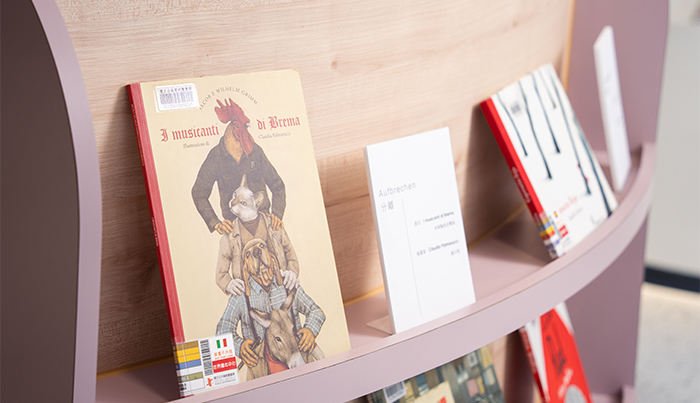
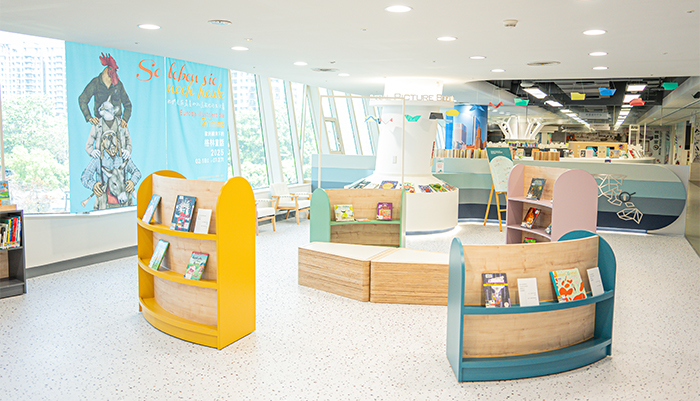
Fairy tales are not only childhood memories, but also reflections of culture and values. Curated by the International Youth Library in Germany, the international touring exhibition “Happily Ever After. Europe Illustrates the Grimms” presented by the National Library of Public Information and the Goethe-Institut Taipei, features 21 illustrations from 13 European countries. The exhibit invites visitors to rediscover these timeless stories and explore how their meanings evolve across different eras and cultural contexts.
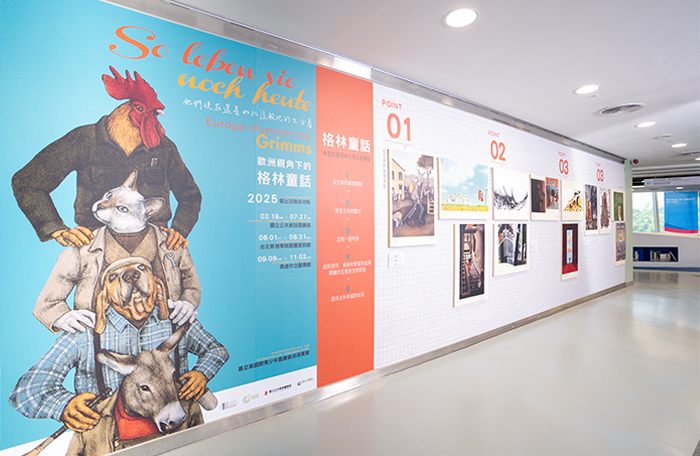
Jacob and Wilhelm Grimm’s two-volume *Children’s and Household Tales*, first published in 1812 and 1815, have become the most translated works in German literature. The enduring popularity of Grimm’s Fairy Tales lies in their rich imagination and their ability to convey universal values—kindness, integrity, diligence, and courage—that transcend borders and generations.
Wang Hui Mei, Director of the Information Center at the Goethe-Institut Taipei, noted, “These values remain relevant across cultures, which is why Grimm’s Fairy Tales are still beloved today.” She added that the Grimm brothers not only collected and rewrote stories but also made lasting contributions to German grammar and linguistic development, laying the foundation for modern German philology.
From Biedermeier to Contemporary Art: Illustration and Narrative Structure
Historically, Grimm’s Fairy Tales were illustrated in the Biedermeier style, known for its simplicity, realism, and nostalgic warmth. These artworks often depicted German forests and medieval towns as backdrops. In contrast, contemporary illustrators boldly reinterpret the tales using diverse perspectives and artistic styles.
“These illustrators don’t merely complement the stories—they express their era’s viewpoints through their work,” said Wang. The exhibit includes humorous, realistic, and even avant-garde styles that challenge traditional imagery and open new interpretations of Grimm’s tales.
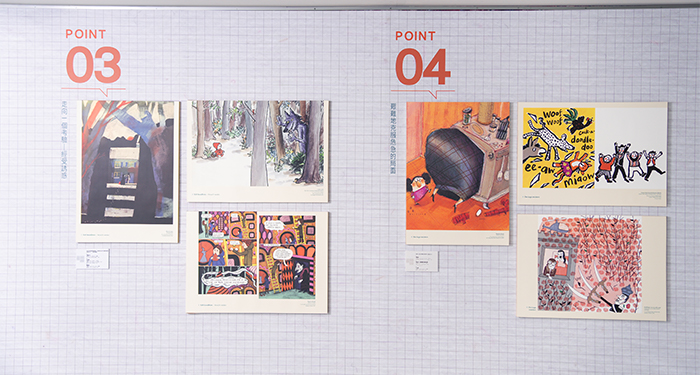
The exhibition groups its 21 illustrations into five narrative themes commonly found in fairy tales: 1. Separation—where the protagonist begins their journey; 2. On the Move—facing challenges and the unknown; 3. Proving Oneself—overcoming threats, temptations, and despair; 4. Taking Control—turning the tide after hardship; 5. Happy Ending—the ultimate fulfillment.
This structure not only highlights universal elements of fairy tales but also mirrors the human experience of growth. “Germans excel at structuring and analyzing stories—sometimes to the point where even romantic tales feel like assembly lines,” Wang joked. “But even Hollywood superhero films follow a similar arc.”
Among the 21 works, some tales are widely known, such as *The Wolf and the Seven Little Goats*, presented with humor; others, like *Bearskin*, depict a warrior’s deal with the devil and his eventual redemption after seven years. “These illustrations help audiences appreciate contemporary artistic takes on Grimm’s Fairy Tales while inviting reflection—why do some tales become global classics while others remain obscure?” said Wang.
The International Youth Library: A Champion of Children's Literature
Founded in 1949, the International Youth Library in Germany is the world’s largest and most influential library of children’s and youth literature. It preserves and promotes children’s books and illustration art from around the world. With over 600,000 books in its collection, the library regularly curates international exhibitions to introduce outstanding global children’s literature to diverse audiences.
“Happily Ever After. Europe Illustrates the Grimms” not only revives classic fairy tales, but also encourages viewers to consider how stories change over time. From tradition to innovation, Grimm’s tales continue to ignite imagination. Whether young or old, everyone can find resonance in these stories and illustrations. The exhibit invites all to discover the endless possibilities of fairy tales with an open heart.