




In 2025, Taiwan officially became a “super-aged society,” with adults aged 65 and above making up more than 20 percent of the population—meaning that one in every five people is now a senior. In this context, public libraries face a new shared challenge: how to encourage older adults to step into libraries and rediscover the pleasures of reading at different stages of life. At the same time, this shift has opened rich new possibilities for lifelong learning.
As a leading force in reading promotion in Taiwan, the National Library of Public Information(NLPI)established a “Senior Learning Resource Area” as early as the opening of its new building in 2012. Referencing Taiwan Senior Learning, edited by Wei Hui Juan, Director of the Center for Adult and Continuing Education at National Chung Cheng University, the library created a themed self-directed learning book section based on topics related to the active aging process. In recent years, NLPI has further intensified its efforts to develop services centered on adults aged 55 and above, gradually building a friendly and multifaceted lifelong learning environment from both the hardware and software sides.
Age-Friendly Design in Response to Senior Needs
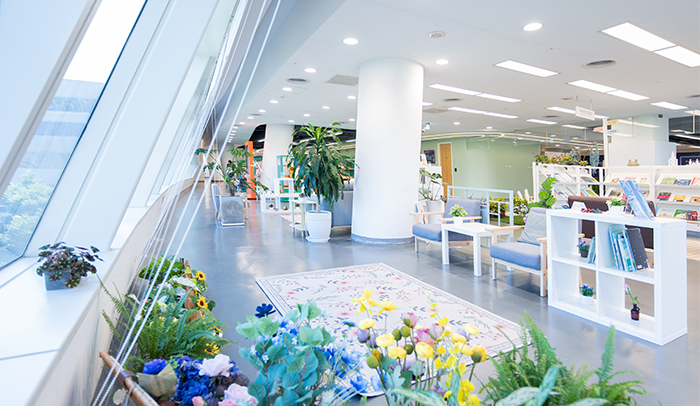
Upon arriving at the Senior Learning Resource Area on the third floor of the NLPI, one can clearly sense this thoughtful design: the height of the bookshelves has been deliberately adjusted, with no books placed on the bottom shelf so that bending down is no longer necessary. The seating has also been carefully selected, with armrests and a level of firmness that makes standing up much easier. In addition, the library has purchased reading aids suitable for older adults, including magnifying glasses, large-format newspaper reading machines, audiobooks, and large-print books.
In addition to the meticulous spatial planning, the NLPI officially established the Silver Academy in 2024, integrating what had previously been scattered courses into a more comprehensive senior learning system built around three core themes: aesthetics, technology, and health. Tsai Chia Hsun, a librarian in NLPI’s Multicultural Services Division, noted that the curriculum spans psychological counseling, physical exercise, everyday aesthetics, smartphone use, and AI applications, while also addressing spiritual and life-related issues in response to older adults’ need to re-engage themselves and their lives after retirement.
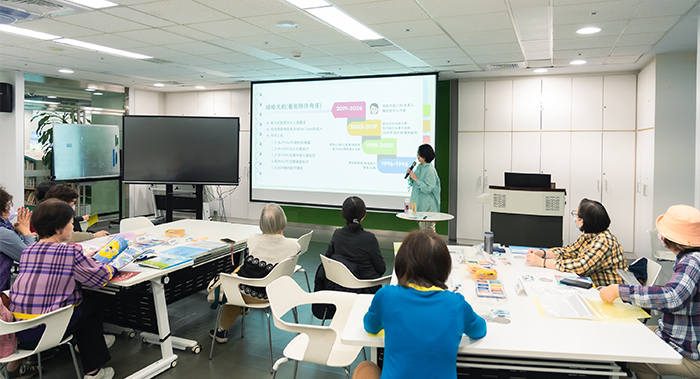
“The most popular courses are, of course, the smartphone classes! So many people sign up—you can really feel the sense of urgency among older adults,” Tsai said with a smile. She added that many older adults often say their children are too busy to teach them, so learning on their own feels more reassuring. NLPI places special emphasis on information and media literacy: when older adults learn how to use smartphones and better understand the online world, they are better equipped to identify scam messages, strengthen relevant knowledge, and enhance their own sense of security in society. “We do not want older adults to become digital outsiders.” By transforming public resources into digital services suitable for older users, libraries can help ensure that no one is left behind by the times.
Reading and Creating - Activating the Power of Picture Books for Older Adults
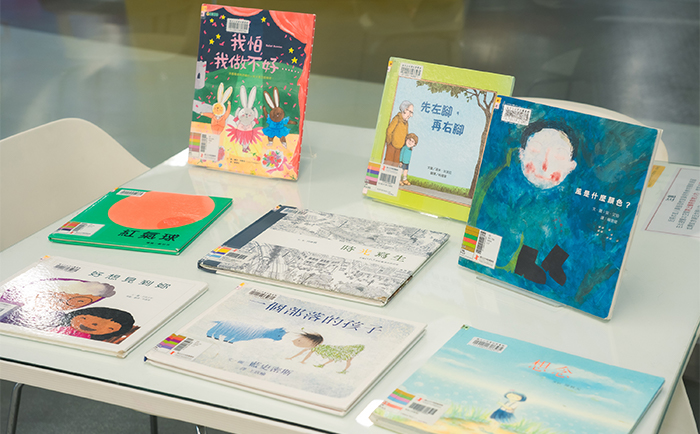
To enrich the reading lives of older adults, the NLPI created the Silver Picture Book Garden in 2024 and, in 2025, began training volunteers to lead picture-book reading sessions. “Picture books are not only for children. Though their texts are brief, they hold abundant imagination and emotion, which often resonate deeply with older readers,” Tsai Chia Hsun explained. She noted that titles such as Barbara Cooney’s Emma and Miss Rumpus have inspired rich discussion, awakened many memories, and prompted older adults to share stories from their own lives.
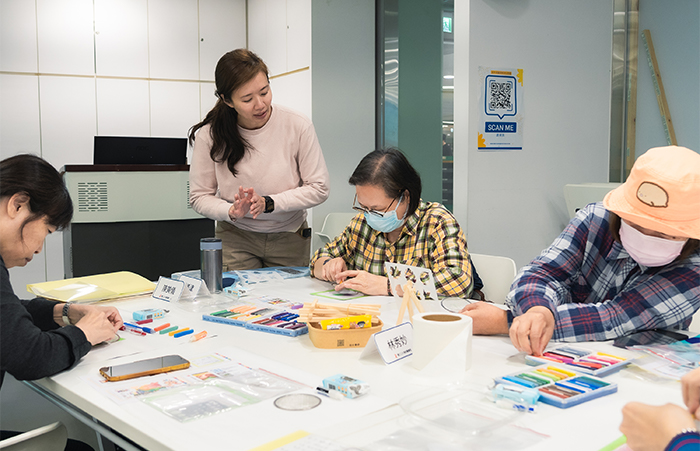
Drawn in by the charm of picture books, many older adults have gradually fallen in love with the library. In March 2026, the NLPI further launched a Senior Picture Book Creation Workshop, inviting picture-book storyteller Hsu Chiao Ling, picture-book author Chang Man Chi, art companion practitioner Chang Hui Hsin, and senior-learning instructor Chang Su Chen to guide older adults through a series of classes. Through words, colors, and hands-on creation, the workshop led participants step by step in transforming the small stories held in their memories into picture-book works of their own.
“We hope that older adults will not merely be listeners to stories, but will also become storytellers and creators of stories,” Tsai Chia Hsun said. She added that in the future, this creative model could be integrated with the library’s “Dream Picture Book Database” and published in the form of e-books, making the works accessible to more readers and allowing personal life stories to become part of the public memory.
As the Silver Academy has gradually built up a stable learner community, its LINE group has grown from more than 300 members to over 500, with the number of followers and participants continuing to rise far beyond expectations. Page after page and course after course, the NLPI is opening another path of reading and creation for the senior generation, turning lifelong learning from a slogan into a gentle companionship infused with the fragrance of books.