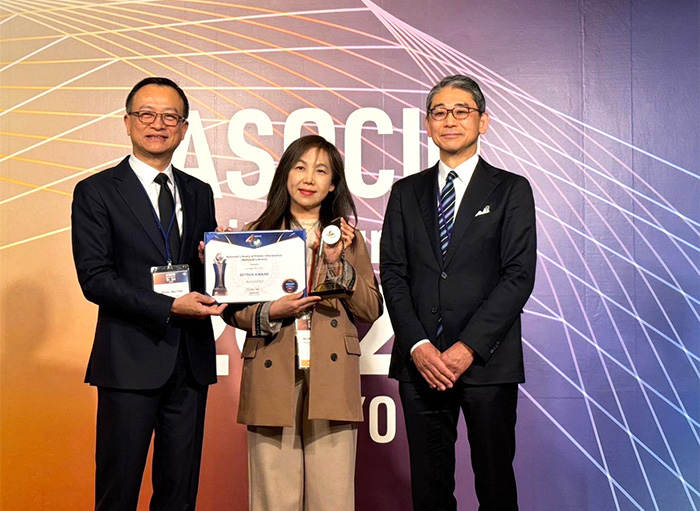
From efficient, convenient physical smart services to online digital resource integration and sharing, the National Library of Public Information has innovatively combined virtual and real services to bridge the gap between readers and books. In 2024, it won the “ASOCIO DX Award - EdTech Award,” becoming an international model for smart libraries.
In the children’s book section of the National Central Library (NLPI), a father helps his daughter choose a picture book. Using his phone to input the book title, a cartoon owl on the screen guides them through the bookshelves to locate the storybook. The daughter excitedly picks up the book and begins reading on the floor, while the father remarks with a smile, “It’s so much easier to find books now.”
Elsewhere, a graduate student in Miaoli, preparing to write a thesis, needs to access a sociology journal article unavailable in the local libraries. By logging into the “One Card Integration Platform,” he finds the required material within minutes. This demonstrates how digital advancements bring convenience regardless of location.
Transforming from a physical library into a knowledge hub integrating virtual and real elements, the NLPI not only changes the way people read but also injects new possibilities into modern life by bridging virtual and physical spaces.
The Boundless Allure of Virtual Libraries: How "One Card" Changes Knowledge Flow
“In 2024, readers from libraries in counties outside the six major cities can use the One Card Integration Platform to connect their library cards to our digital collections,” explains Liu Yen-Kai, IT Specialist at NLPI. Although NLPI’s digital collections are extensive, many local libraries have limited resources, making access inconvenient. The development of this platform simplifies the process and enables knowledge sharing without boundaries.
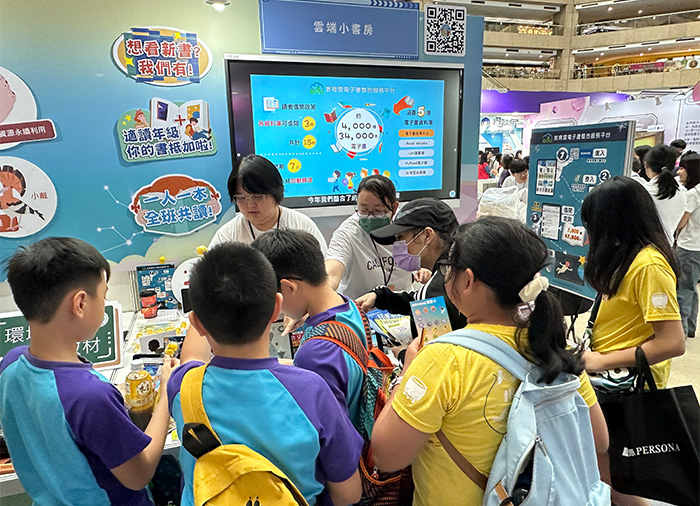
The “One Card Integration” addresses regional resource-sharing issues, while the “Education Cloud eBooks” further enhances the teaching and learning process with intelligence and flexibility. Designed for teachers and students nationwide, this platform consolidates diverse e-book resources, allowing educators to find suitable teaching materials and students to explore subjects ranging from science to literature. Since its launch, it has served over 3,000 schools with a monthly borrowing volume of 15,000 books. NLPI’s data shows a continuous increase in reading demand, particularly in interdisciplinary learning.
Dedicated Book Consultant: Surprises with AI Book Selection
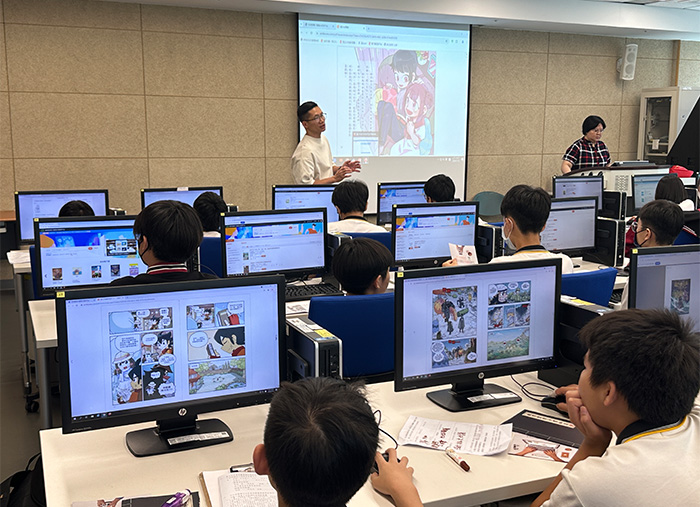
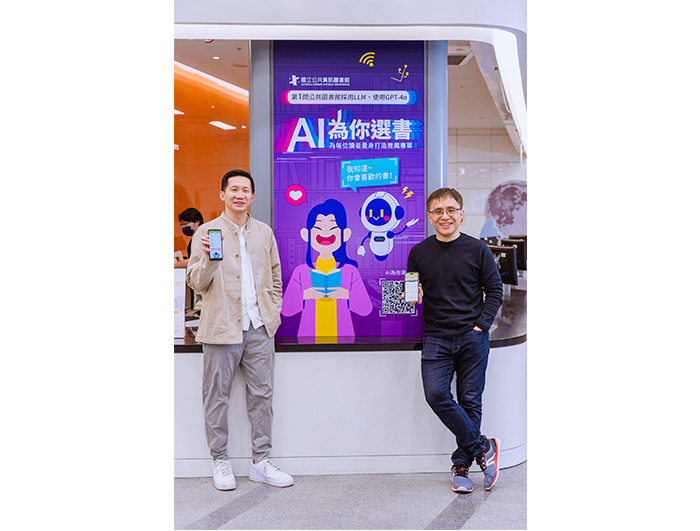
For book lovers, choosing a book can sometimes be a delightful journey but also a challenge. In September 2024, NLPI launched the "AI Book Selection" service, making the process easier and more enjoyable. Using GPT-4 technology, it overcomes the limitations of traditional keyword-based searches.
For instance, a high school student named Kai, who recently developed an interest in fantasy novels, receives a precise and engaging book list tailored to his borrowing history and recent reading preferences. Each recommendation iNLPIudes a brief reason and relevant keywords, enabling quick decisions. The system generates a new list for every 15 books borrowed, acting as a personal consultant to enhance user engagement and make reading an exciting exploration.
Fast and Efficient: Connecting Virtual and Real with Smart Experiences
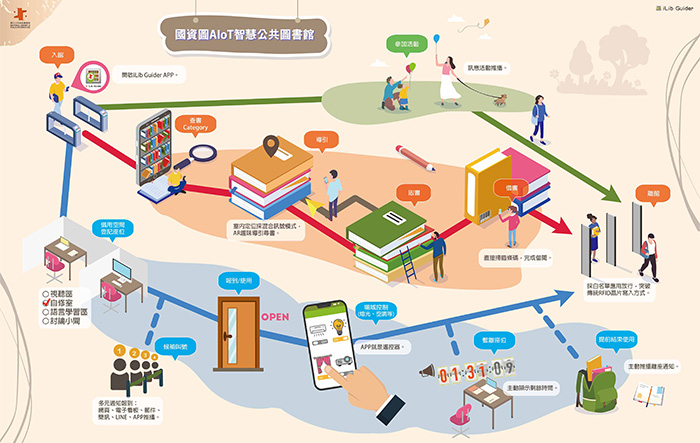
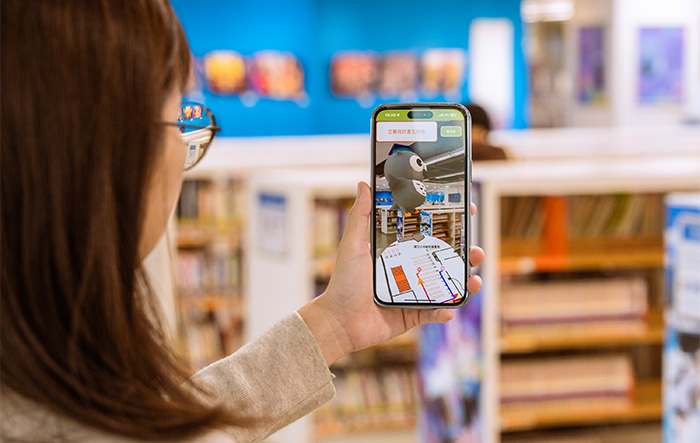
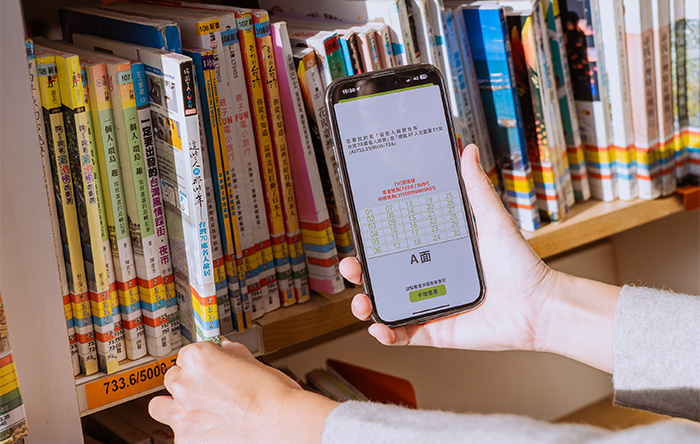
While readers explore the virtual world, NLPI’s on-site smart services offer additional convenience. The “iLib Guider” app integrates indoor navigation, book searches, contactless borrowing, and returns, allowing most library services to be operated via mobile phones.
According to NLPI IT Analyst Fu Chun-Chi, “30% of book loans are completed using the mobile borrowing function, demonstrating high user reliance on the app.” The “iLib Guider” app acts like a library-specific Google Maps, precisely guiding users to book locations and enabling borrowing with barcode scanning, offering a smooth and efficient process.
Smart Space Management: Redefining Library Interaction
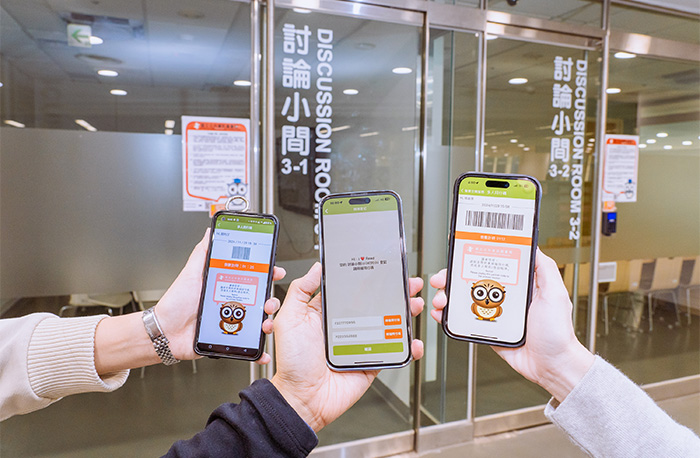
NLPI not only introduced book-finding applications but also offers smart space management through the "iSpace Smart Space Service." This integrates all library spaces, allowing users to reserve facilities, control audiovisual equipment, and manage access through various channels like websites, kiosks, and apps.
The service aligns ESG sustainability principles by managing energy usage efficiently, such as turning lights and air-conditioning on and off precisely as needed. This not only optimizes space usage but also provides readers with a seamless and thoughtful learning environment.
The Future of Reading: From Smart Technology to Boundaryless Sharing
These innovations have made NLPI a domestic model and earned international acclaim. Services like mobile borrowing and smart space management have been replicated by other libraries and shared globally.
The NLPI plans to further upgrade its AI book selection to offer age-specific and thematic book lists and optimize recommendations based on user behavior. It also aims to enhance national library resource integration, enabling quick searches for international journals and expanding the reach of the Education Cloud platform.