Written by/Jhang Ming Rong
Photographer/Zhuang Zhen Feng、Jiang Ming Yang
What new sparks can emerge when digital reading meets generative AI? The National Library of Public Information has redesigned its second-floor digital space and, in 2026, launched the futuristic PLUS SPACE Digital Co-Creation Hub. Inviting readers to co-create with AI, the space uses everyday topics and current events as entry points, connecting them with a rich array of e-books and online resources. In an immersive and interactive environment, readers can explore technology, acquire new knowledge, and enjoy an entirely new reading experience.
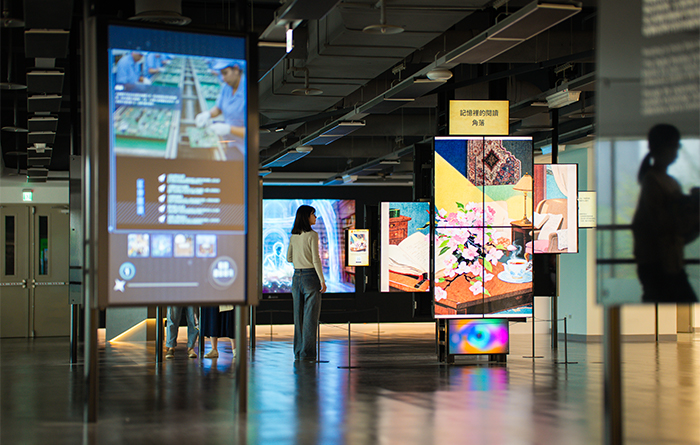
As digital reading and generative AI become increasingly widespread, changes in the way people read have made the role of the National Library of Public Information (NLPI) more important than ever. NLPI offers one of Taiwan’s most comprehensive digital reading collections, with more than 490,000 e-books, along with electronic databases covering periodicals and newspapers, children’s picture books, language learning, the humanities and arts, natural sciences, audiovisual materials, and leisure content. Supporting online reading across multiple devices 24 hours a day, the library breaks through the limits of time and space to provide readers across the country with convenient and immediate access to reading services.
To encourage more people to use its digital collections and respond to the growing trend of cross-disciplinary reading, the NLPI has developed a new digital floor space, PLUS SPACE Digital Co-Creation Hub, centered on experiential services and a user-oriented approach. Integrating the two defining features of digital reading and AI co-creation, the space not only shows the library’s comprehensive digital reading services but also establishes a landmark environment that reflects the atmosphere of the intelligent age and aligns with NLPI’s forward-looking identity.
According to NLPI Director Ma Xiang Ping, the Digital Co-Creation Hub is built around four “I” s—Information, Inspiration, Imagination, and Innovation—as its core spirit. Through the exhibition space, the library hopes readers will gain practical information, collaborate with AI in co-creation, and, through interaction, experience moments of sudden inspiration that bring innovative thinking and imagination into everyday life.

Empathetic Digital Reading - Bringing Knowledge Closer to Everyday Life
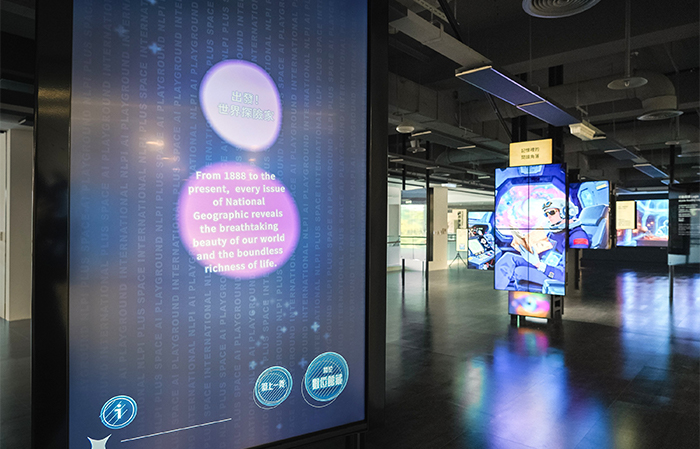
The Digital Co-Creation Hub adopts aurora black as its main color palette, creating an atmosphere that is both futuristic and composed, where readers can immerse themselves in a quiet yet distinctive reading experience. The space is divided into six zones—3D Time Machine, Empathetic Digital Reading, Let’s PLUS: Inspiration Puzzle, Mobile Reading Login, AI Co-Created Chapters: Mo-Hen, and Inspiration Window—all inspired by the big and small details of everyday life. Through these zones, visitors are guided toward cross-disciplinary reading and generative AI, bringing the library’s digital collections closer to readers.
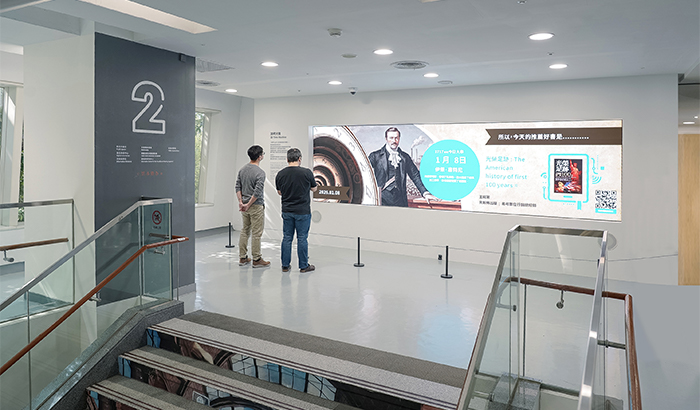
As visitors make their way up the stairs to the second floor of the NLPI, they are greeted by the striking 3D Time Machine. With vivid large-screen audiovisual and 3D effects, the installation creates the sensation of being swept into a torrent of information, delivering the visual impact of technology while symbolizing the beginning of a journey into the world of digital reading. As visitors approach the screen, they activate the Book Destined for Your feature, which recommends e-books at random based on major historical events or notable figures associated with that day in history. By connecting knowledge to everyday points of reference, the feature sparks curiosity and gradually leads readers into the central exhibition area of the Digital Co-Creation Hub, where they can further explore NLPI’s rich digital collections.
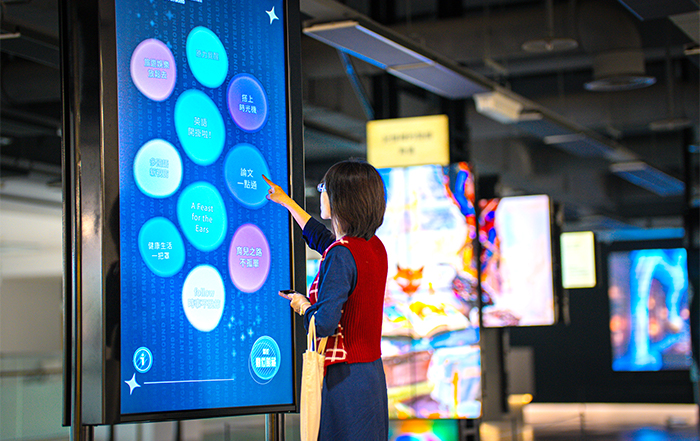
In the central exhibition area, Empathetic Digital Reading features three vertical screens designed to resonate with visitors through relatable everyday themes. Playful prompts such as Time to Relax with Travel and Entertainment, Level Up Your English, You’re Not Alone on the Parenting Journey, and Couch Potato with a Literary Soul invite users to select topics that interest them and connect directly to relevant digital collections. In this way, access to knowledge becomes more user-centered, more intuitive, and more engaging. Whether they are teachers and students, working professionals, families, older adults, or teenagers, visitors can easily find database content that suits their needs and supports lifelong learning.
In addition, this section features a rich selection of electronic journals and magazines. In response to current events, seasonal developments, and changing trends, it curates popular topics such as tariffs, barrier lakes, and reality shows into visually engaging content, helping readers quickly absorb the latest information and stay up to date with current issues.
Starting from Readers’ Needs - Enjoy Reading through Multiple Channels
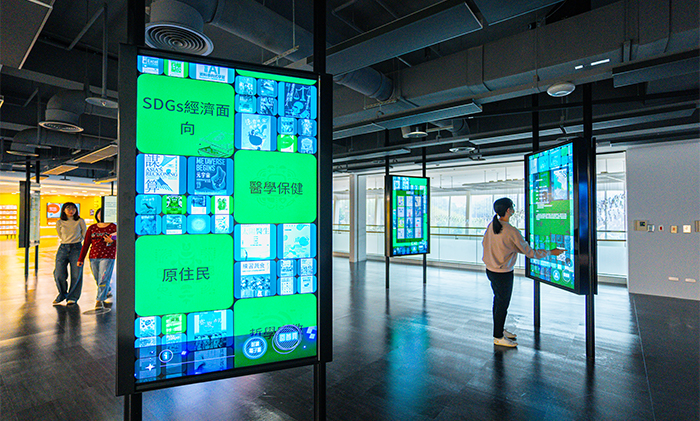
On the other side of the space, Mobile Reading Login is another key feature of the Digital Co-Creation Hub. In the past, readers had to log in to their NLPI accounts before they could access and download e-books, and these login procedures often became an entry barrier for first-time users of digital reading. To lower that threshold, NLPI has directly integrated its E-book Service Platform into this zone, allowing readers to browse and try out the service freely on screen. Selected titles are even available for full-text reading on site, making it easy for visitors to experience the convenience and versatility of e-books and significantly increasing their willingness to borrow digital titles.
Ma Xiang Ping noted that, to better respond to readers’ needs, NLPI conducted a questionnaire survey of more than one hundred readers before planning the Digital Co-Creation Hub. The results showed that many frequent visitors to the library were still not very familiar with its digital resources, while some assumed that a high level of technological knowledge was necessary to read e-books.
“The Digital Co-Creation Hub is designed to break this perception,” she said. “Starting from the readers’ perspective, we use everyday themes to draw them in and lower the barriers to use, so that readers can personally experience the advantages of e-books and digital resources in the library and, in turn, become more willing to continue enriching themselves through different forms of reading in the future.”
Co-Creating Text and Images with AI - Returning to the Essence of Reading through Technological Experience
As generative AI becomes increasingly widespread, technological tools are no longer just helpful assistants in people’s work and daily lives; they are also opening new experiential possibilities in the field of text-and-image creation. Through generative AI technology combined with sound and visual installations, Let’s PLUS: Inspiration Puzzle allows readers to interact with AI using simple spoken prompts and experience the appeal of new technology firsthand. By speaking a short phrase about their mood into the screen, readers can instantly generate a matching piece of short writing and an image. From realistic and lyrical to humorous and science-fiction styles, the possibilities are wide-ranging. Even those who are not skilled at writing or drawing can create a work simply through spoken input, turning inspiration into something tangible and experiencing the fun of co-creation through technology.
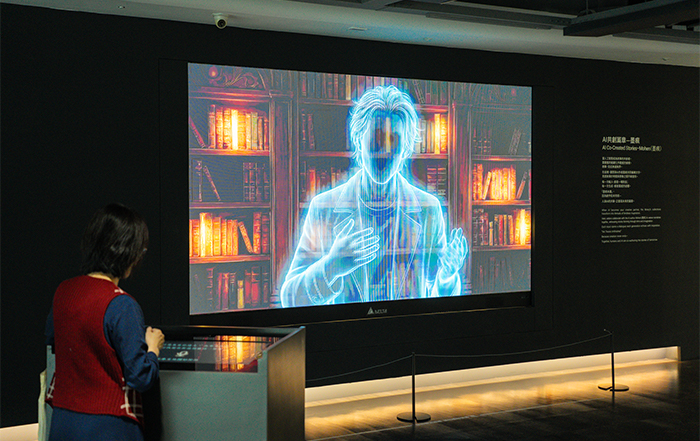
Hidden in the deepest part of the Digital Co-Creation Hub is a mysterious and captivating virtual literary creator named “Mo Hen”. In AI Co-Created Chapters: “Mo Hen”, he guides readers on a creative journey. After visitors give instructions to the AI, they unlock a series of creative stages, through which “Mo Hen” draws on NLPI’s rich digital resources—including the rare collection Lan Pu, e-books, and Photo News—to generate text, illustrations, and accompanying music that come together as a compelling story. This experience not only allows readers to discover the library’s collections through immersive interaction and appreciate the diverse possibilities of AI technology but also lets them scan a QR code to save their own personalized creation.
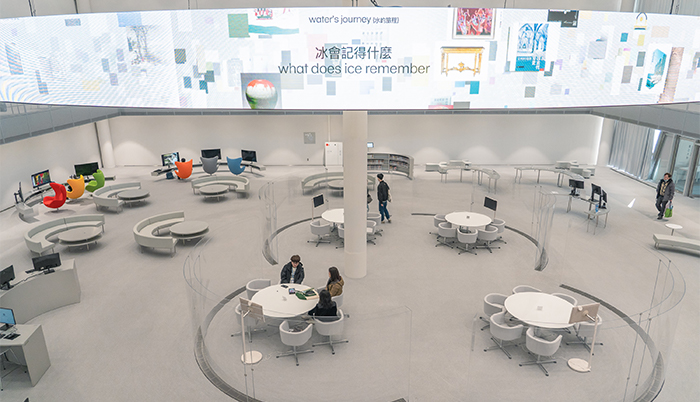
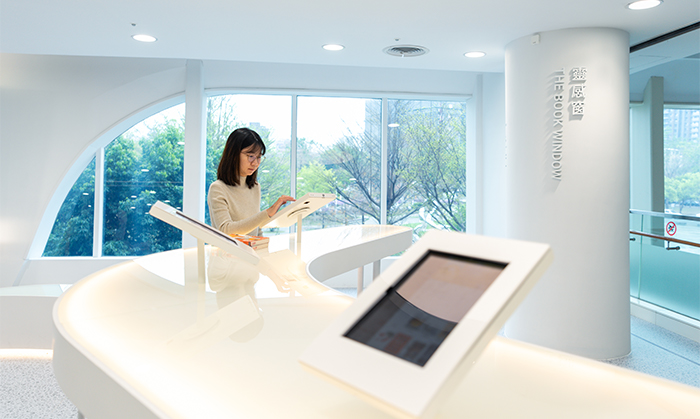
The final stop, Inspiration Window, is set within a pure white space. In contrast to the calm, dark-toned style of the central exhibition area, this zone brings in natural light and greenery through large windows, creating a serene and graceful atmosphere. For readers who have just moved through a series of technology-driven experiences, it preserves a quiet moment of reflection and a return to the humanistic essence of reading. Pausing in this bright and elegantly designed space, readers can look out over the sunlit outdoor plaza or lightly tap the e-book readers placed on the tables, allowing the world of reading to unfold endlessly before them while inspiration settles and deepens in the stillness.
Through its rich and varied interactive experiences, the Digital Co-Creation Hub encourages readers to use technology to acquire knowledge and express themselves. More importantly, it transforms reading from a passive act into an active process of exploration and creation, offering a new interpretation of reading in the age of AI.
When AI Meets Books - Reading Services Reach a New Level
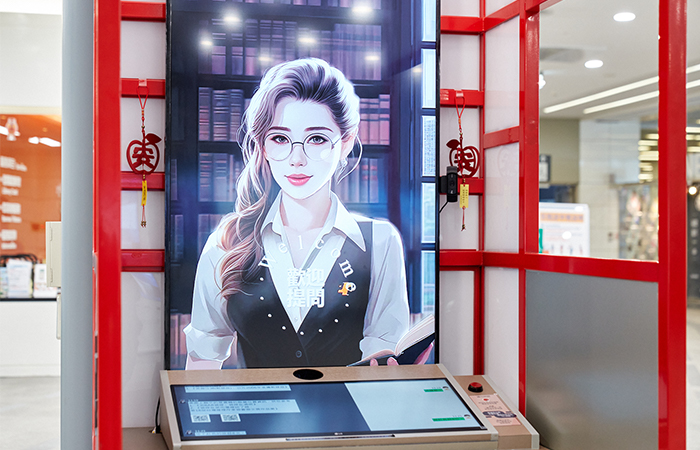
The generative AI-powered Digital Co-Creation Hub offers the public opportunities to co-create with AI and has quickly become one of the library’s newest highlights. Looking back at NLPI’s adoption of AI, the library launched Taiwan’s first AI-powered virtual librarian, “Xiao Shu”, in 2023; introduced AI Picks You in 2024; and followed with AI Book Finder in 2025. Through these initiatives, NLPI has actively integrated artificial intelligence into library services, providing readers with more convenient, comprehensive, and personalized precision reading services.
AI Picks You is the first service of its kind among public libraries in Taiwan, featuring the use of the GPT-4o large language model. With readers’ consent, the AI analyzes their borrowing records from the past two years to understand their reading preferences and profile, then compares these patterns with the characteristics of the library’s holdings to generate a personalized reading description and a recommended book list. Much like hiring a professional consultant, the service delivers tailor-made recommendations for each reader. Since its launch, AI Picks You has recorded tens of thousands of searches annually and has been widely welcomed by readers.
With the assistance of AI, readers can be matched more precisely with books that interest them, saving time in the search process and increasing their chances of discovering lesser-known titles beyond bestseller lists or librarian recommendations. For today’s readers facing information overload, this provides a more efficient model for book selection. In addition, AI can identify latent interests from borrowing patterns; for example, if a reader frequently borrows books on cooking and travel, the system may recommend titles related to international cultures, opening new reading possibilities.
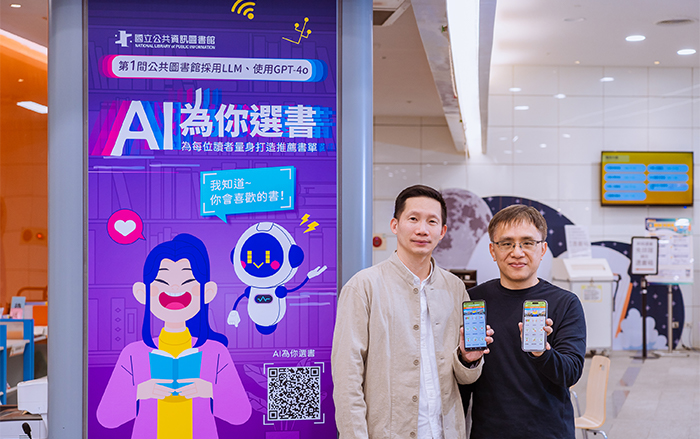
To promote the use of library collections, AI Picks You is also designed to display each book’s availability status, and readers can directly click to borrow e-books, significantly improving convenience and reading efficiency. The recommendation results continue to be updated as subsequent borrowing activity refines the model, making selections increasingly accurate over time. At the same time, a feedback mechanism allows readers to add their own text under reading preference features, helping the AI generate recommendations that better match their current needs.
A New Revolution in Search - “AI Book Finder” Breaks Through the Limits of Keyword Search
The newly launched AI Book Finder is transforming readers’ conventional impressions of library catalog searches with its powerful search capabilities. In the past, users usually had to enter an exact book title or the correct keywords to find what they wanted. For readers who had forgotten a title or were unsure of a book’s category, the search process often ended in frustration.
Liu Yen Kai, a counselor in NLPI’s Information Systems Division, explained that AI Book Finder uses AI-powered semantic understanding technology, allowing readers to search without entering precise keywords. Instead, they can simply describe the topic, situation, or reading need in natural language, and the system will draw on book titles, summaries, and related content descriptions to understand the meaning of the query and identify books that more closely match the reader’s needs.
He noted that traditional library retrieval largely depends on bibliographic data, subject headings, and keywords established through manual cataloging. For example, in the case of books discussing sarcopenia, if the bibliographic record does not include a search term such as “muscle loss,” which is closer to everyday reader language, users who search with “muscle loss” may fail to find the relevant book.
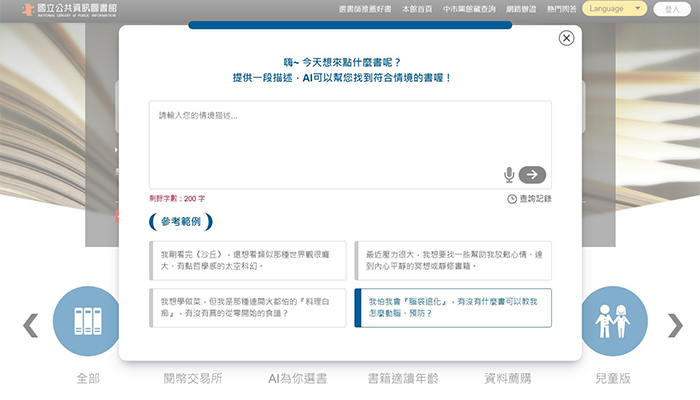
With smart technology, AI Book Finder effectively solves this problem. Readers can search by entering a partial book title or even a descriptive sentence such as “I’m looking for books on stock investment planning for office workers” or “I want to travel to Hokkaido for a week in winter,” and the system will return corresponding recommendations. By using fuzzy concepts to overcome the limits of keyword search, it helps readers narrow their choices quickly and makes the book-finding process both easier and more enjoyable.
From consultation and book selection to book discovery and co-creation, NLPI continues to explore the many dimensions and possibilities of AI-powered services. With the official opening of the Digital Co-Creation Hub, the library remains committed to preserving the humanistic essence of reading while keeping pace with new technology, bringing a new definition to the connection between reading and innovation. Looking ahead, NLPI will continue to make good use of AI to provide diverse services and create even more varied and innovative reading experiences for its users.